
Resources
Fresh Finds on Sobriety: The Latest Articles, Videos & Insights.
Discussion Topics for Support Meetings
Opening for meeting Onwards & Upwards Sunday 28th December 2025
This evening, we’re here
together for one reason.
Not because we set out to end up here.
Not because we woke up one day and decided, “I’d like to have a complicated, painful relationship with alcohol.”
We’re here because of a slippery slope we found ourselves on without ever knowingly choosing it.
All we did, at the start, was what everyone else was doing.
Having fun.
Chilling out.
Being young.
Being wild.
Partying.
And somewhere along the way, without a clear line in the sand, the fun disappeared.
The chilling out turned into anxiety.
The social drinking turned into drinking alone.
And we were left with the crazy... at a party of one.
Most of us here will be familiar with “The Broken Promises Cycle”
We’ve made a thousand promises to ourselves:
“Never again.”
“Not like that.”
“Next time will be different.”
We’ve asked ourselves the same painful questions:
Why me?
Why can’t I just have one?
Why does everyone else seem to manage this?
And we’ve convinced ourselves, over and over,
that today will be different.
Just one.
Just to take the edge off.
Just to fit in.
Just to quiet the noise.
Just because.
And one turns into two.
Two turns into three.
And suddenly we’re back there again:
Messy.
Argumentative.
Tearful. Ashamed.
Guilt-ridden.
Staring at ourselves wondering how we got here again.
The Seduction of Alcohol
So the obvious question is:
Why is it so hard to let go of the one thing that causes so much turmoil in our lives?
Why is alcohol so seductive?
Why do intelligent, capable, thoughtful women stay hooked,
even when all the evidence is pointing to the same truth:
That alcohol is harming us.
Physically.
Emotionally.
Spiritually.
Why is that so hard to accept?
And here’s the honest answer:
I don’t have a neat, intellectual explanation.
There are many factors; biology, culture, trauma, conditioning, but I stopped trying to think my way out of my drinking a long time ago.
Because thinking never saved me.
The Truth About “One Drink”
What I do know, what I am absolutely clear on, is this:
If I have one drink, I want more.
That want persists regardless of:
How good my life is
How strong my values are
How much I have to lose
How much insight I think I have
That want overrides my intellect.
It overrides my values.
That’s not a moral failing.
That’s not weakness.
That’s just how it is.
And if that is true...
then the potential for harm when I drink is huge.
That’s not drama.
That’s not exaggeration.
That’s a basic risk assessment.
Normalising the Blind Spot
When I was around 28, during my first period of truly dangerous drinking,
the idea that I might have a problem didn’t even cross my mind.
Not addiction.
Not harmful drinking.
Not dependency.
I thought I was entirely justified.
Life was hard.
I was coping.
I was doing what I needed to do.
And I held onto that thinking for years, drinking my way through the good, the bad and the indifferent.
I was ashamed.
I hid it.
But I didn’t really question it.
I only faced it when I heard other women speak their truth.
I was 50 years old.
And yes, sometimes I still ask myself:
Why did it take me so long?
That question is part of my acceptance.
Keeping It Simple
What I’ve learned in nearly three years of sustained sobriety is that I have to keep things simple.
Because getting sober is hard.
It requires a level of honesty with ourselves that can feel almost unmerciful at times and sometimes that honesty has to extend to the people closest to us.
When we were drinking, many of us lived our lives with a great big elephant in every room.
We knew we were drunk.
They knew we were drunk.
And somehow, we convinced ourselves we were acting normally.
Acknowledging that, first to ourselves and then sometimes to others, is painful.
But it’s also honest.
And honesty is freeing.
You don’t have to spill every detail.
You don’t owe anyone your life story.
It can be as simple as saying:
“This is harder than I thought, so I’m keeping a low profile for a while until I get used to not drinking. Can you help me do that?”
That is enough.
And keeping it simple in early sobriety often means making very practical, protective choices:
Don’t go to social events where drinking is involved for a while.
Don’t invite people around to your house for celebrations.
Don’t socialise at events centred around alcohol.
Don’t walk down the alcohol aisle in the supermarket.
This isn’t hiding.
This is you setting boundaries.
This is you allowing yourself the space you need to get through the first, most vulnerable period of sobriety.
And yes, this kind of vulnerability can feel especially hard for many of us.
As mothers.
As partners.
As women who are used to holding everything together and sorting everyone else’s problems out.
But scars don’t heal if we keep picking at them.
Early sobriety is a wound that needs care, not pressure.
Give yourself time.
Give yourself space.
Give yourself permission to breathe.
Stay connected, go to meetings on the good days as well as the bad ones. Keep your sober battery on full. Stay tethered to your sobriety and your community, make it part of your routine. One thing sobriety gives you is time, use some it to focus on your own needs, it takes time for sobriety to become your normal but even then complacency can creep in. Make sobriety part of you, who you are and something you value. It's not a chore, it's a gift.
My simple truth is this... I need clarity not another podcast or lesson on neuro plasticity.
I can’t afford rabbit holes.
I can’t afford endless analysis.
I can’t afford navel-gazing. I have to stay tethered to my truth.
And my truth is very clear:
I cannot drink alcohol.
Not today.
Not socially.
Not carefully.
Not someday.
That clarity isn’t restrictive, it’s freeing.
Because once I stopped arguing with alcohol,
I finally had space to build a life without it.
Reflections
“What did you hear tonight that felt true for you?”
“What does ‘one drink’ actually mean for you, not in theory, but in reality?”
“Where are you being asked right now to keep things simpler than you’d like?”
“What do you need most from your sobriety or from this group tonight?”
If you’re struggling tonight,
If part of you still wants to negotiate, minimise or bargain,
you are not broken.
But alcohol is not neutral for us.
And the sooner we stop asking it to be something it can never be,
the sooner we can begin to heal.
You don’t need all the answers tonight.
You don’t need certainty.
You don’t need confidence.
You just need honesty.
And you don’t have to do this alone.
Sandra x
Not because we set out to end up here.
Not because we woke up one day and decided, “I’d like to have a complicated, painful relationship with alcohol.”
We’re here because of a slippery slope we found ourselves on without ever knowingly choosing it.
All we did, at the start, was what everyone else was doing.
Having fun.
Chilling out.
Being young.
Being wild.
Partying.
And somewhere along the way, without a clear line in the sand, the fun disappeared.
The chilling out turned into anxiety.
The social drinking turned into drinking alone.
And we were left with the crazy... at a party of one.
Most of us here will be familiar with “The Broken Promises Cycle”
We’ve made a thousand promises to ourselves:
“Never again.”
“Not like that.”
“Next time will be different.”
We’ve asked ourselves the same painful questions:
Why me?
Why can’t I just have one?
Why does everyone else seem to manage this?
And we’ve convinced ourselves, over and over,
that today will be different.
Just one.
Just to take the edge off.
Just to fit in.
Just to quiet the noise.
Just because.
And one turns into two.
Two turns into three.
And suddenly we’re back there again:
Messy.
Argumentative.
Tearful. Ashamed.
Guilt-ridden.
Staring at ourselves wondering how we got here again.
The Seduction of Alcohol
So the obvious question is:
Why is it so hard to let go of the one thing that causes so much turmoil in our lives?
Why is alcohol so seductive?
Why do intelligent, capable, thoughtful women stay hooked,
even when all the evidence is pointing to the same truth:
That alcohol is harming us.
Physically.
Emotionally.
Spiritually.
Why is that so hard to accept?
And here’s the honest answer:
I don’t have a neat, intellectual explanation.
There are many factors; biology, culture, trauma, conditioning, but I stopped trying to think my way out of my drinking a long time ago.
Because thinking never saved me.
The Truth About “One Drink”
What I do know, what I am absolutely clear on, is this:
If I have one drink, I want more.
That want persists regardless of:
How good my life is
How strong my values are
How much I have to lose
How much insight I think I have
That want overrides my intellect.
It overrides my values.
That’s not a moral failing.
That’s not weakness.
That’s just how it is.
And if that is true...
then the potential for harm when I drink is huge.
That’s not drama.
That’s not exaggeration.
That’s a basic risk assessment.
Normalising the Blind Spot
When I was around 28, during my first period of truly dangerous drinking,
the idea that I might have a problem didn’t even cross my mind.
Not addiction.
Not harmful drinking.
Not dependency.
I thought I was entirely justified.
Life was hard.
I was coping.
I was doing what I needed to do.
And I held onto that thinking for years, drinking my way through the good, the bad and the indifferent.
I was ashamed.
I hid it.
But I didn’t really question it.
I only faced it when I heard other women speak their truth.
I was 50 years old.
And yes, sometimes I still ask myself:
Why did it take me so long?
That question is part of my acceptance.
Keeping It Simple
What I’ve learned in nearly three years of sustained sobriety is that I have to keep things simple.
Because getting sober is hard.
It requires a level of honesty with ourselves that can feel almost unmerciful at times and sometimes that honesty has to extend to the people closest to us.
When we were drinking, many of us lived our lives with a great big elephant in every room.
We knew we were drunk.
They knew we were drunk.
And somehow, we convinced ourselves we were acting normally.
Acknowledging that, first to ourselves and then sometimes to others, is painful.
But it’s also honest.
And honesty is freeing.
You don’t have to spill every detail.
You don’t owe anyone your life story.
It can be as simple as saying:
“This is harder than I thought, so I’m keeping a low profile for a while until I get used to not drinking. Can you help me do that?”
That is enough.
And keeping it simple in early sobriety often means making very practical, protective choices:
Don’t go to social events where drinking is involved for a while.
Don’t invite people around to your house for celebrations.
Don’t socialise at events centred around alcohol.
Don’t walk down the alcohol aisle in the supermarket.
This isn’t hiding.
This is you setting boundaries.
This is you allowing yourself the space you need to get through the first, most vulnerable period of sobriety.
And yes, this kind of vulnerability can feel especially hard for many of us.
As mothers.
As partners.
As women who are used to holding everything together and sorting everyone else’s problems out.
But scars don’t heal if we keep picking at them.
Early sobriety is a wound that needs care, not pressure.
Give yourself time.
Give yourself space.
Give yourself permission to breathe.
Stay connected, go to meetings on the good days as well as the bad ones. Keep your sober battery on full. Stay tethered to your sobriety and your community, make it part of your routine. One thing sobriety gives you is time, use some it to focus on your own needs, it takes time for sobriety to become your normal but even then complacency can creep in. Make sobriety part of you, who you are and something you value. It's not a chore, it's a gift.
My simple truth is this... I need clarity not another podcast or lesson on neuro plasticity.
I can’t afford rabbit holes.
I can’t afford endless analysis.
I can’t afford navel-gazing. I have to stay tethered to my truth.
And my truth is very clear:
I cannot drink alcohol.
Not today.
Not socially.
Not carefully.
Not someday.
That clarity isn’t restrictive, it’s freeing.
Because once I stopped arguing with alcohol,
I finally had space to build a life without it.
Reflections
“What did you hear tonight that felt true for you?”
“What does ‘one drink’ actually mean for you, not in theory, but in reality?”
“Where are you being asked right now to keep things simpler than you’d like?”
“What do you need most from your sobriety or from this group tonight?”
If you’re struggling tonight,
If part of you still wants to negotiate, minimise or bargain,
you are not broken.
But alcohol is not neutral for us.
And the sooner we stop asking it to be something it can never be,
the sooner we can begin to heal.
You don’t need all the answers tonight.
You don’t need certainty.
You don’t need confidence.
You just need honesty.
And you don’t have to do this alone.
Sandra x
Opening for meeting Onwards & Upwards Sunday 15th feb 2026
My opening today was
inspired by 2 things I read this week. I was reading through a diary from a
couple of years ago and came across a list of 10 ways we as women give our
power away. I don’t remember where I got them from but the message hit home. The second was revisiting urges or cravings in
sobriety through the TABB90 course. It made me think how giving our power away
can actually create the perfect storm for developing a reliance on alcohol and
the subsequent cravings, thoughts and urges we experience as a result of it.
When we think about cravings, we often think about alcohol itself. We think about habit, routine, triggers, maybe even addiction pathways in the brain. And those things are real.
But underneath many cravings is something deeper. Disconnection. Exhaustion. Resentment. Unmet needs and that results in builds pressure.
We become depleted and overwhelmed. We feel unseen and unimportant. We feel like we are carrying too much. That internal pressure doesn’t just disappear. It looks for relief and that is where cravings are born. The lesson in the TABB90 course gives us valuable insights and methods to ride out those urges and most importantly how not to act on them. But often those urges come to visit because something inside us is crying out for care.
If all day long we abandon ourselves, override our needs and push through exhaustion, by the evening our nervous system is flooded and our emotional tank is empty. That is the perfect storm for a craving.
Sobriety isn’t just about learning not to act on the urges.
It’s also about looking at what’s creating the storm in the first place.
Because when we begin reclaiming our power, protecting our time, speaking our needs, trusting our intuition, allowing ourselves to matter, we reduce the internal pressure.
And when the pressure reduces, the urge to escape softens. It’s about awareness. Because the more we understand where cravings really come from, the more empowered we become.
And empowered women don’t need to escape their own lives.
We often drink as means of Emotional Avoidance And if we are honest, most urges to drink aren’t random.
We drink because alcohol changes how we feel... fast.
But in sobriety, especially early sobriety, we remove that coping mechanism and suddenly we are left face-to-face with ourselves. That can feel terrifying. But there’s a Strange Paradox here that is something I find fascinating.
In our everyday lives, we sit with enormous amounts of discomfort.
We:
And we do it. We tolerate external discomfort every single day.
But when it comes to sitting with our own feelings?
Our own sadness?
Our own anger?
Our own unmet needs?
That’s when we check out. Why? Why is it easier to tolerate external discomfort than internal discomfort?
That’s something worth reflecting on.
In early sobriety, this feels amplified.
Our nervous systems are on high alert. Our brains are wired to expect alcohol as relief.
There’s a learned pathway that says: “This feeling? We fix this with a drink.”
So when discomfort arises, the urge is not about the drink itself, it’s about escape.
It’s about changing how we feel right now. And learning not to do that is one of the biggest shifts in recovery.
We are learning to...
Stay with the feeling.
Stay with the urge.
Stay with yourself.
Many of us, especially women, operate on a default setting of people pleasing.
We:
Our energy goes outward. All day. And then at 6pm, 7pm, 8pm... we are empty.
There is nothing left in the tank.
So what do we do?
We open the fridge.
We pour a glass.
We take the shortcut to relief.
Because we are exhausted.
Why do we put our own needs last?
There are many reasons; conditioning, upbringing, expectations, trauma, roles we’ve internalised.
But I also think it connects to something deeper:
We give our power away.
And when we repeatedly give our power away, we reinforce the belief, often unconsciously, that:
When we live like that long enough, we disconnect from ourselves. And alcohol becomes the way we cope with that disconnection.
What does giving your power away look like and how does that impact on our sobriety?
1. Over-Explaining
Over-explaining often comes from not feeling inherently valid.
We don’t just say no - we justify it.
We don’t just make a choice - we defend it.
We don’t just have a feeling - we provide evidence.
In early sobriety this shows up when we feel we must justify not drinking. We over-explain why we’re not having wine. We soften it. We make others comfortable.
Every time we over-explain, we subtly say:
“My simple truth isn’t enough.”
Reclaiming power means allowing:
“No” to be a full sentence.
“My choice” to be enough.
2. Holding Grudges
Holding grudges can feel like protection.
But in reality, grudges keep us emotionally tied to the past. They keep our nervous system activated. They replay old pain.
And often, we drink to quiet that replay.
Resentment is heavy. It drains energy. It keeps us in a state of internal agitation.
Reclaiming power doesn’t mean excusing behaviour.
It means choosing not to let someone live rent-free in your emotional space.
In sobriety, letting go becomes freedom, not for them, but for you.
3. Giving Away Your Time
Time is one of the clearest forms of power.
When we constantly give our time away, saying yes when exhausted, always being available, never protecting our space, we are telling ourselves our rest is negotiable.
And then we end the day depleted.
That depletion is a trigger.
The drink becomes the only “me time”.
In early sobriety, protecting your time is protecting your recovery.
Sometimes reclaiming power looks like:
“I’m not available.”
“I need an early night.”
“I can’t take that on.”
4. Trying to Fix Everything
Many of us are fixers.
We fix moods.
We fix problems.
We fix tension.
We fix other people’s discomfort.
Why?
Because if everything around us feels calm, we feel safe.
But constantly fixing others disconnects us from ourselves. It also creates chronic stress which fuels the urge to escape.
Sobriety asks:
What if you let others manage their own emotions?
What if you stopped carrying what isn’t yours?
Your recovery requires energy.
You cannot fix everyone and heal yourself at the same time.
5. Giving Too Many Chances
Compassion is beautiful.
But repeatedly tolerating behaviour that hurts you erodes self-respect.
Each time we ignore a boundary violation, we quietly tell ourselves:
“This is what I deserve.”
That belief feeds disconnection.
Disconnection feeds numbing.
Numbing fed drinking.
Reclaiming power is learning the difference between kindness and self-abandonment.
Sometimes strength looks like:
“I love you, but this doesn’t work for me.”
6. Disregarding Your Intuition
Intuition is quiet.
Alcohol is loud.
When we override our inner knowing, when we ignore that gut feeling, we weaken our trust in ourselves.
And when we don’t trust ourselves, we look outward for certainty.
In early sobriety, intuition can feel faint. But it’s still there.
Reclaiming power means pausing and asking:
“What do I actually feel here?”
“What feels true for me?”
The more you listen, the stronger that voice becomes.
7. Neglecting All That You Have
We are often wired to focus on what’s missing.
What we haven’t achieved.
What we lack.
What others seem to have.
This creates a constant sense of insufficiency.
And that sense of “not enough” is uncomfortable.
So we drink to soften it.
Neglecting what we already have, our strengths, our progress, our resilience, keeps us disconnected from gratitude and self-worth.
Reclaiming power means acknowledging:
“I have survived.”
“I am learning.”
“I am changing.”
That matters.
8. Silencing Your Voice and Your Needs
This one is huge.
When we silence ourselves to avoid conflict, rejection or discomfort, we slowly disappear in our own lives.
And when we don’t feel seen or heard, we feel alone even in relationships and homes full of people.
Loneliness is a powerful trigger.
Sobriety invites us to speak.
To ask.
To express.
To take up space.
Your needs are not excessive.
Your voice is not inconvenient.
Your presence is not too much.
9. Comparing Yourself to Others
Comparison keeps us in a constant state of deficiency.
“She’s doing better.”
“She’s further ahead.”
“She looks happier.”
“She’s coping better.”
Comparison disconnects us from our own path.
In recovery, this is especially dangerous.
Someone else’s chapter 20 can make us feel ashamed of our chapter 2.
Reclaiming power means turning inward:
“What do I need today?”
“What progress have I made?”
Your journey is not behind. It is yours.
10. Avoiding the Present Moment
This may be the deepest one.
When we avoid the present moment, by scrolling, overworking, drinking, obsessing about the future, replaying the past, we avoid feeling.
The present moment is where discomfort lives.
But it’s also where healing lives.
Alcohol removes us from now.
Sobriety brings us back.
Closing
Tonight is really about this:
Cravings don’t appear out of nowhere.
They build in the spaces where we’ve abandoned ourselves.
When we give our power away, our time, our voice, our needs, our intuition, we create exhaustion, resentment and overwhelm. And that pressure looks for escape.
But sobriety gives us another option.
Instead of escaping our lives, we begin reshaping them.
Reclaiming your power means choosing yourself in small, daily ways.
It means speaking up. Resting. Setting boundaries. Trusting your inner voice.
It means allowing your needs to matter.
And when you live like that, something shifts.
You don’t just fight urges, you reduce them.
You don’t just resist escape, you remove the need for it.
Because you are building a life you no longer need to run from.
Which of the “power leaks” resonated most with you and how does it show up in your daily life?
Over-explaining? Giving away time? Silencing your needs? Comparing?
What would reclaiming your power in that area look like in one small, practical way?
Sandra x
When we think about cravings, we often think about alcohol itself. We think about habit, routine, triggers, maybe even addiction pathways in the brain. And those things are real.
But underneath many cravings is something deeper. Disconnection. Exhaustion. Resentment. Unmet needs and that results in builds pressure.
We become depleted and overwhelmed. We feel unseen and unimportant. We feel like we are carrying too much. That internal pressure doesn’t just disappear. It looks for relief and that is where cravings are born. The lesson in the TABB90 course gives us valuable insights and methods to ride out those urges and most importantly how not to act on them. But often those urges come to visit because something inside us is crying out for care.
If all day long we abandon ourselves, override our needs and push through exhaustion, by the evening our nervous system is flooded and our emotional tank is empty. That is the perfect storm for a craving.
Sobriety isn’t just about learning not to act on the urges.
It’s also about looking at what’s creating the storm in the first place.
Because when we begin reclaiming our power, protecting our time, speaking our needs, trusting our intuition, allowing ourselves to matter, we reduce the internal pressure.
And when the pressure reduces, the urge to escape softens. It’s about awareness. Because the more we understand where cravings really come from, the more empowered we become.
And empowered women don’t need to escape their own lives.
We often drink as means of Emotional Avoidance And if we are honest, most urges to drink aren’t random.
We drink because alcohol changes how we feel... fast.
But in sobriety, especially early sobriety, we remove that coping mechanism and suddenly we are left face-to-face with ourselves. That can feel terrifying. But there’s a Strange Paradox here that is something I find fascinating.
In our everyday lives, we sit with enormous amounts of discomfort.
We:
- Work jobs we don’t like.
- Spend hours with people we find draining.
- Do repetitive chores.
- Meet endless expectations.
- Manage households.
- Carry emotional labour.
- Care for everyone else’s needs.
And we do it. We tolerate external discomfort every single day.
But when it comes to sitting with our own feelings?
Our own sadness?
Our own anger?
Our own unmet needs?
That’s when we check out. Why? Why is it easier to tolerate external discomfort than internal discomfort?
That’s something worth reflecting on.
In early sobriety, this feels amplified.
Our nervous systems are on high alert. Our brains are wired to expect alcohol as relief.
There’s a learned pathway that says: “This feeling? We fix this with a drink.”
So when discomfort arises, the urge is not about the drink itself, it’s about escape.
It’s about changing how we feel right now. And learning not to do that is one of the biggest shifts in recovery.
We are learning to...
Stay with the feeling.
Stay with the urge.
Stay with yourself.
Many of us, especially women, operate on a default setting of people pleasing.
We:
- Anticipate everyone else’s needs.
- Smooth over tension.
- Keep the peace.
- Say yes when we mean no.
- Take responsibility for emotions that aren’t ours.
Our energy goes outward. All day. And then at 6pm, 7pm, 8pm... we are empty.
There is nothing left in the tank.
So what do we do?
We open the fridge.
We pour a glass.
We take the shortcut to relief.
Because we are exhausted.
Why do we put our own needs last?
There are many reasons; conditioning, upbringing, expectations, trauma, roles we’ve internalised.
But I also think it connects to something deeper:
We give our power away.
And when we repeatedly give our power away, we reinforce the belief, often unconsciously, that:
- I don’t matter as much.
- My needs are secondary.
- My discomfort is inconvenient.
- My feelings are too much.
When we live like that long enough, we disconnect from ourselves. And alcohol becomes the way we cope with that disconnection.
What does giving your power away look like and how does that impact on our sobriety?
1. Over-Explaining
Over-explaining often comes from not feeling inherently valid.
We don’t just say no - we justify it.
We don’t just make a choice - we defend it.
We don’t just have a feeling - we provide evidence.
In early sobriety this shows up when we feel we must justify not drinking. We over-explain why we’re not having wine. We soften it. We make others comfortable.
Every time we over-explain, we subtly say:
“My simple truth isn’t enough.”
Reclaiming power means allowing:
“No” to be a full sentence.
“My choice” to be enough.
2. Holding Grudges
Holding grudges can feel like protection.
But in reality, grudges keep us emotionally tied to the past. They keep our nervous system activated. They replay old pain.
And often, we drink to quiet that replay.
Resentment is heavy. It drains energy. It keeps us in a state of internal agitation.
Reclaiming power doesn’t mean excusing behaviour.
It means choosing not to let someone live rent-free in your emotional space.
In sobriety, letting go becomes freedom, not for them, but for you.
3. Giving Away Your Time
Time is one of the clearest forms of power.
When we constantly give our time away, saying yes when exhausted, always being available, never protecting our space, we are telling ourselves our rest is negotiable.
And then we end the day depleted.
That depletion is a trigger.
The drink becomes the only “me time”.
In early sobriety, protecting your time is protecting your recovery.
Sometimes reclaiming power looks like:
“I’m not available.”
“I need an early night.”
“I can’t take that on.”
4. Trying to Fix Everything
Many of us are fixers.
We fix moods.
We fix problems.
We fix tension.
We fix other people’s discomfort.
Why?
Because if everything around us feels calm, we feel safe.
But constantly fixing others disconnects us from ourselves. It also creates chronic stress which fuels the urge to escape.
Sobriety asks:
What if you let others manage their own emotions?
What if you stopped carrying what isn’t yours?
Your recovery requires energy.
You cannot fix everyone and heal yourself at the same time.
5. Giving Too Many Chances
Compassion is beautiful.
But repeatedly tolerating behaviour that hurts you erodes self-respect.
Each time we ignore a boundary violation, we quietly tell ourselves:
“This is what I deserve.”
That belief feeds disconnection.
Disconnection feeds numbing.
Numbing fed drinking.
Reclaiming power is learning the difference between kindness and self-abandonment.
Sometimes strength looks like:
“I love you, but this doesn’t work for me.”
6. Disregarding Your Intuition
Intuition is quiet.
Alcohol is loud.
When we override our inner knowing, when we ignore that gut feeling, we weaken our trust in ourselves.
And when we don’t trust ourselves, we look outward for certainty.
In early sobriety, intuition can feel faint. But it’s still there.
Reclaiming power means pausing and asking:
“What do I actually feel here?”
“What feels true for me?”
The more you listen, the stronger that voice becomes.
7. Neglecting All That You Have
We are often wired to focus on what’s missing.
What we haven’t achieved.
What we lack.
What others seem to have.
This creates a constant sense of insufficiency.
And that sense of “not enough” is uncomfortable.
So we drink to soften it.
Neglecting what we already have, our strengths, our progress, our resilience, keeps us disconnected from gratitude and self-worth.
Reclaiming power means acknowledging:
“I have survived.”
“I am learning.”
“I am changing.”
That matters.
8. Silencing Your Voice and Your Needs
This one is huge.
When we silence ourselves to avoid conflict, rejection or discomfort, we slowly disappear in our own lives.
And when we don’t feel seen or heard, we feel alone even in relationships and homes full of people.
Loneliness is a powerful trigger.
Sobriety invites us to speak.
To ask.
To express.
To take up space.
Your needs are not excessive.
Your voice is not inconvenient.
Your presence is not too much.
9. Comparing Yourself to Others
Comparison keeps us in a constant state of deficiency.
“She’s doing better.”
“She’s further ahead.”
“She looks happier.”
“She’s coping better.”
Comparison disconnects us from our own path.
In recovery, this is especially dangerous.
Someone else’s chapter 20 can make us feel ashamed of our chapter 2.
Reclaiming power means turning inward:
“What do I need today?”
“What progress have I made?”
Your journey is not behind. It is yours.
10. Avoiding the Present Moment
This may be the deepest one.
When we avoid the present moment, by scrolling, overworking, drinking, obsessing about the future, replaying the past, we avoid feeling.
The present moment is where discomfort lives.
But it’s also where healing lives.
Alcohol removes us from now.
Sobriety brings us back.
Closing
Tonight is really about this:
Cravings don’t appear out of nowhere.
They build in the spaces where we’ve abandoned ourselves.
When we give our power away, our time, our voice, our needs, our intuition, we create exhaustion, resentment and overwhelm. And that pressure looks for escape.
But sobriety gives us another option.
Instead of escaping our lives, we begin reshaping them.
Reclaiming your power means choosing yourself in small, daily ways.
It means speaking up. Resting. Setting boundaries. Trusting your inner voice.
It means allowing your needs to matter.
And when you live like that, something shifts.
You don’t just fight urges, you reduce them.
You don’t just resist escape, you remove the need for it.
Because you are building a life you no longer need to run from.
Which of the “power leaks” resonated most with you and how does it show up in your daily life?
Over-explaining? Giving away time? Silencing your needs? Comparing?
What would reclaiming your power in that area look like in one small, practical way?
Sandra x
News & Policy
- The Journal – Number of people seeking help to cut alcohol use is at its highest in over a decade.
Demand for support is rising, showing a shift in public attitudes toward drinking.
https://jrnl.ie/6778335
- US Dept of Health and Human Services – Enhancing the health and well-being of all Americans.
Ongoing federal programs focus on prevention and alcohol-related health outcomes.
https://www.hhs.gov/surgeongeneral/reports-and-publications/alcohol-cancer/index.html
- RTÉ – 18-hour alcohol advertising crackdown comes into force.
New rules target the influence of marketing on drinking, especially for younger audiences.
Personal Stories & Visibility
- BBC – Woman’s 300-mile walk for “life-changing” charity.
A recovery journey used to raise awareness and support services.
https://www.bbc.com/news/articles/ce824zn29n7o
- BBC – GBBO star says everything has changed after going sober.
A public figure shares how sobriety transformed daily life.
https://www.bbc.com/news/articles/cn4xkmkjv0mo
- Journey Enterprises – Making Recovery Visible.
Community initiatives encourage open discussion and recovery role models.
Research & Health
- US News – Menstrual cycle and link to drinking.
Studies suggest hormonal cycles may shape alcohol use patterns.
https://www.usnews.com/news/health-news/articles/2025-06-23/menstrual-cycle-might-play-a-role-in-drinking
- US News – Alcohol-linked liver deaths rising in women and young adults.
Data shows concerning increases in health risks for vulnerable groups.
https://www.usnews.com/news/health-news/articles/2025-06-13/alcohol-linked-liver-deaths-rising-in-women-and-young-adults
- The Menopause Charity – Brain fog and hormonal health.
Highlights overlaps between menopause symptoms and alcohol’s effects.
https://themenopausecharity.org/information-and-support/symptoms/brain-fog/
Recovery & Lifestyle
- After – Alcohol-Free Magazine (July 2025).
Latest edition offers stories, tools, and inspiration from the alcohol-free community.
https://aftermagazine.com/
- American Psychological Association – ‘Sober curiosity’ destigmatizes the desire not to drink.
Recognizing non-drinking as a valid and positive lifestyle choice.
https://www.apa.org/monitor/2025/01/sober-curious-alcohol-moderation
- Sage Journals – The Sober Professor.
Personal reflections on sobriety, stigma, and professional identity.
https://journals.sagepub.com/doi/10.1177/00914509211031092
- Renew Magazine – Updated recovery-focused articles.
Ongoing features on sober living and recovery experiences.
Acceptance practices highlighted as valuable in recovery and wellbeing.
https://www.psychologytoday.com/gb/blog/being-your-best-self/202203/the-healing-power-of-radical-acceptance
- The Louis Theroux Podcast – Sobriety.
In this podcast there’s lots of points for consideration... But above all Steve Coogan normalises the giving up and why and the benefits... even though Louis Theroux plays devils advocate. A lot of talented and lively people have our thing. I think that people with our thing are often lively and talented and have had interesting lives and can / need to go on to resume interesting lives. Recommended by a TABB Member.
https://open.spotify.com/episode/20e61KUat4X7Gt0NPFnQQr?si=1715be29256a4c3a
Videos
- Brené Brown - Marriage is not 50/50.
Brené Brown says marriage isn’t 50/50 - it’s about each partner showing up with whatever they have that day and working as a team to make 100%.
https://youtube.com/shorts/yfL4RTuC9Bk?si=9Zbrcmh1ofxMCOwO
- Brené Brown - The power of Vulnerability, transcript here.
Brené Brown’s The Power of Vulnerability shows how embracing uncertainty and emotional honesty is the key to connection, courage, and wholehearted living.
https://youtu.be/iCvmsMzlF7o
- Tara Brach - Short clip on Radical Acceptance as prerequisite to change.
Tara Brach’s short clip on Radical Acceptance teaches how meeting ourselves with compassion and presence can free us from self-judgment and suffering.
https://youtu.be/_K35O3G82L4
- Addiction in older women.
There are many life events that can trigger drinking problems in older adults. Ellen began drinking heavily when she was diagnosed with cancer at age 74.
https://youtu.be/YnuSv_Vd-WM
- Drinking in 65+.
Learn the facts about aging and alcohol use and the answer to the question: how does alcohol affect older adults?
https://youtu.be/4YcwhTIrt1o
- It gets greater later.
In a talk packed with wry wisdom, pop culture queen Bevy Smith shares hard-earned lessons about authenticity, confidence, mature success and why, if you put in the work, "life gets greater later."
https://youtu.be/7vqnazqmceQ
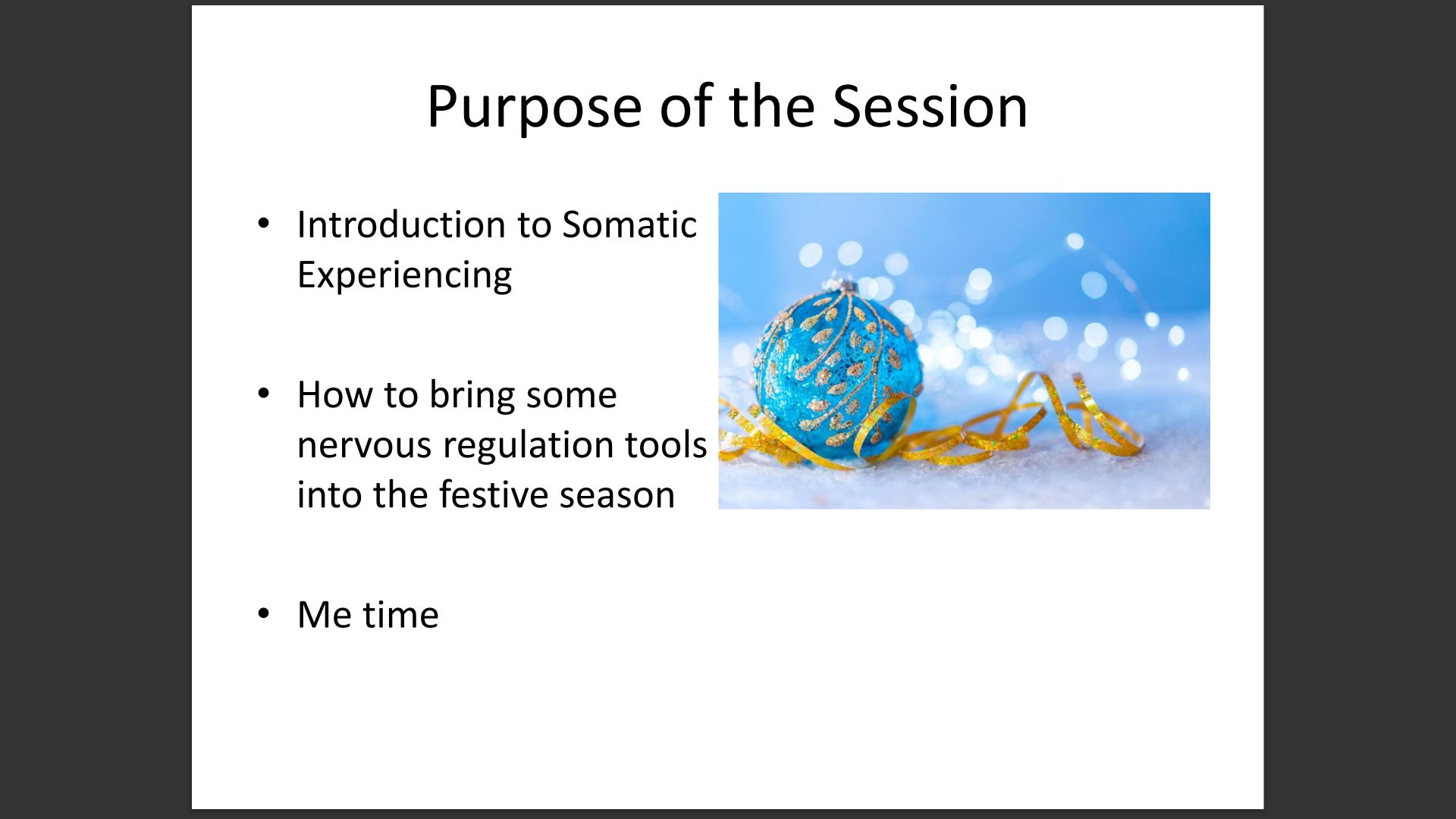
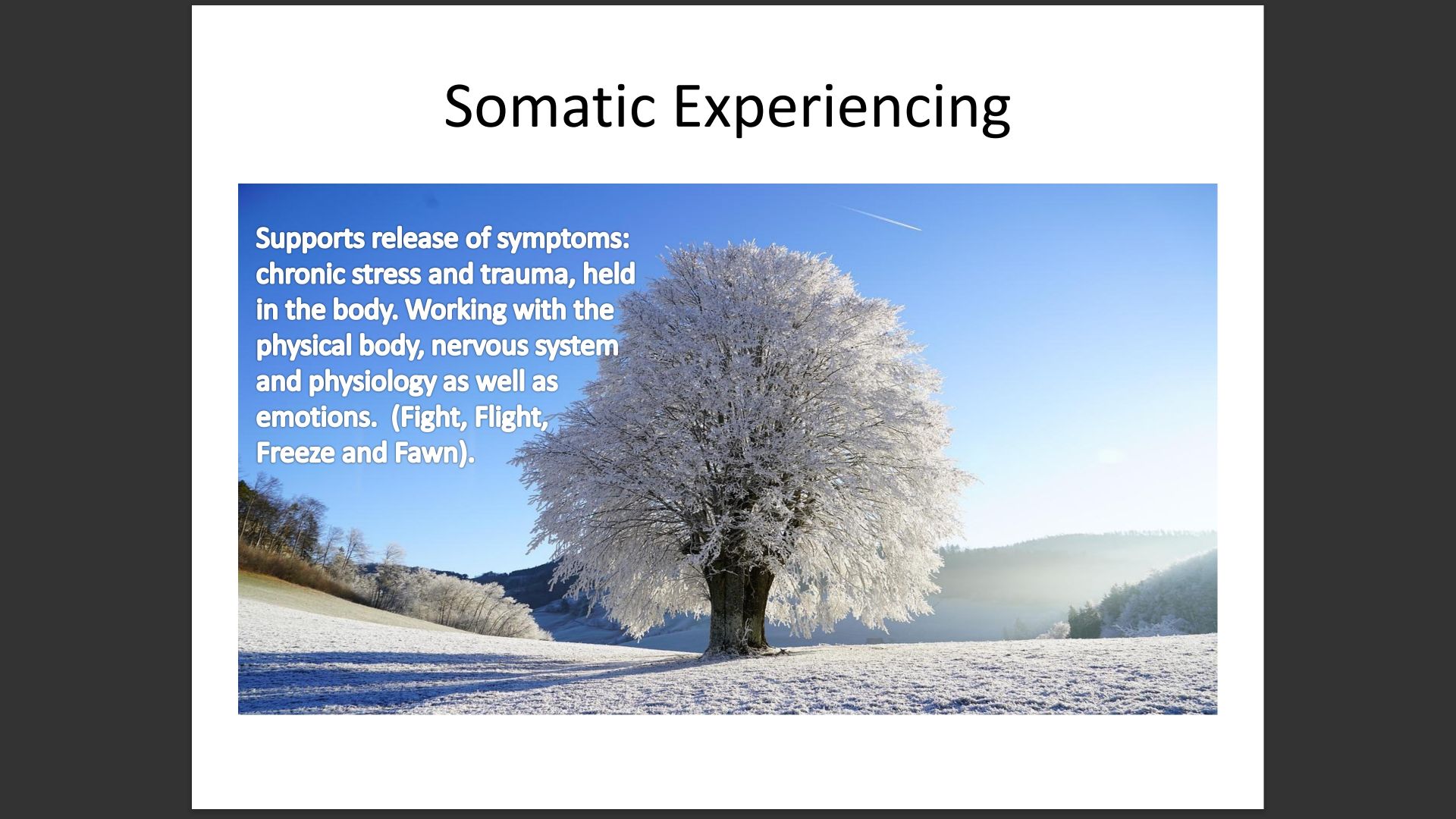
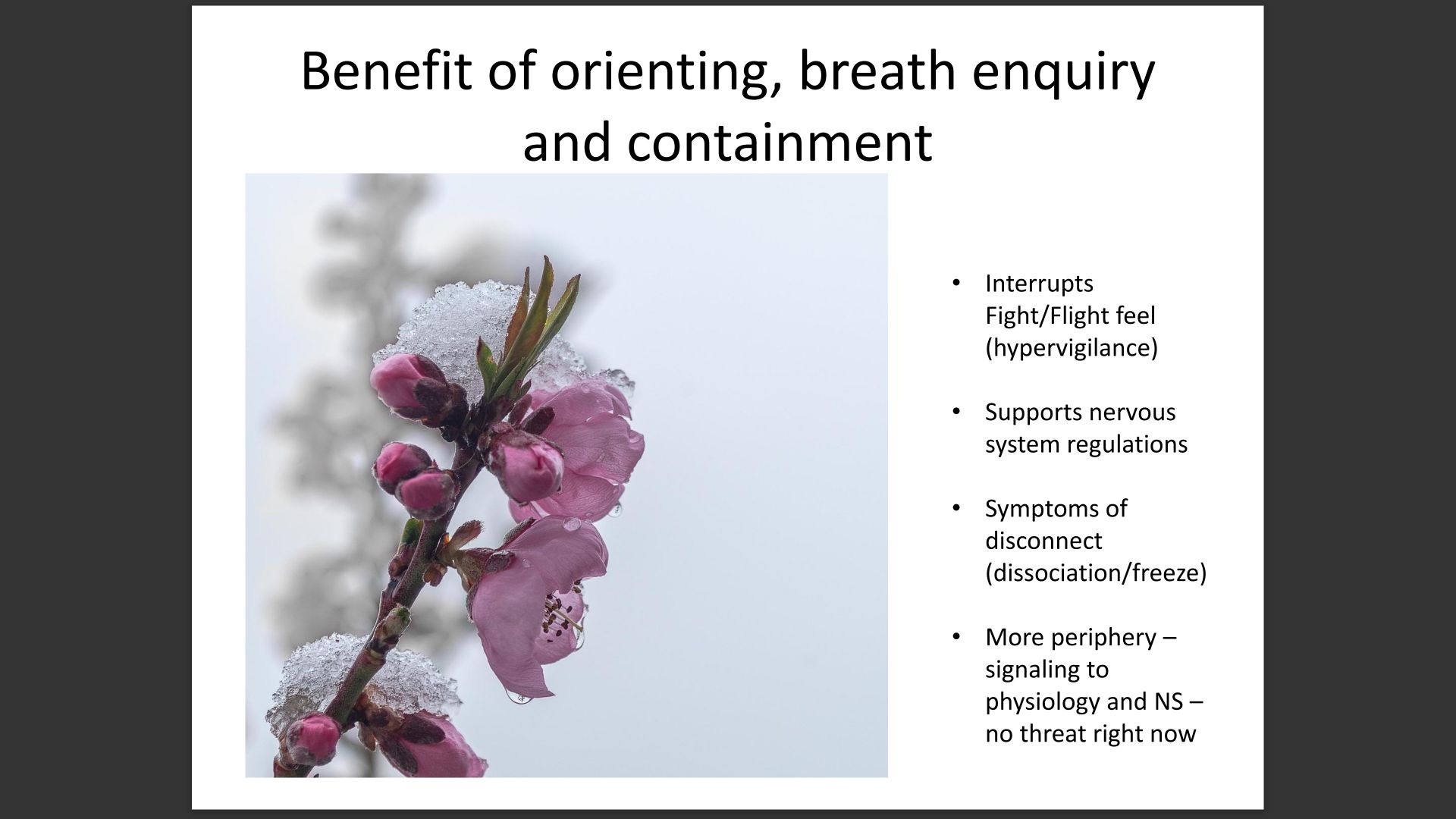
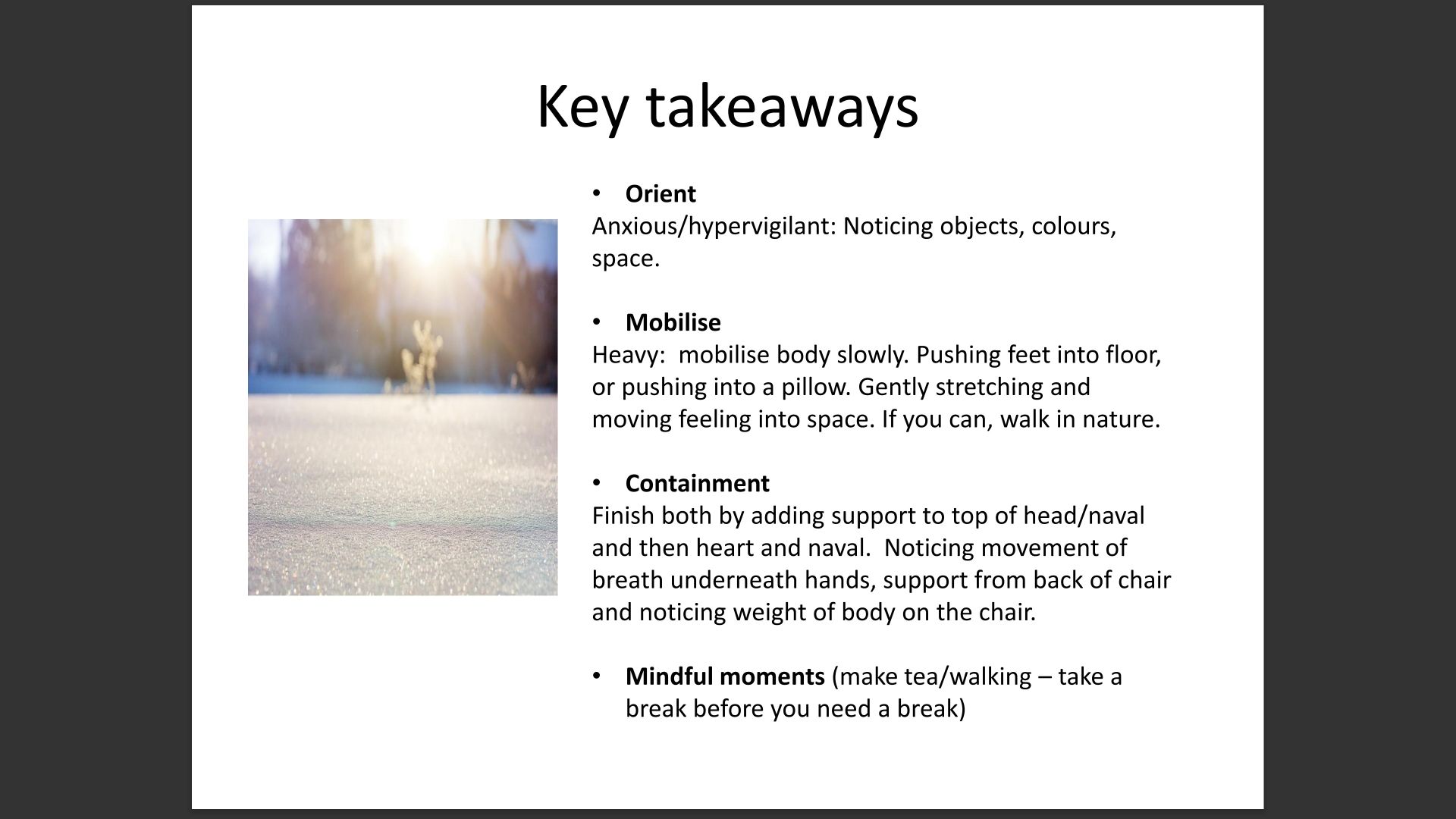
Festive Somatic Reset presentation
These are the slides from Nadia Miller's presentation.
Podcasts
- Sandra & Sarah's Sober Journey at No More Booze - The Podcast.
This week on No More Booze, I’m joined by the dynamic duo, Sandra Healy and Sarah Mills, co-founders of the TABB platform, dedicated to helping women take a break from booze. We talk about their personal journeys with alcohol, touching on the good, the bad and the moments of realisation that led them to an alcohol-free life.
TABB for Women Ltd
145A Ashley Road,