
Claire is telling Negative Nellie to Pack Her Bags: Quieting the Inner Critic in Sobriety
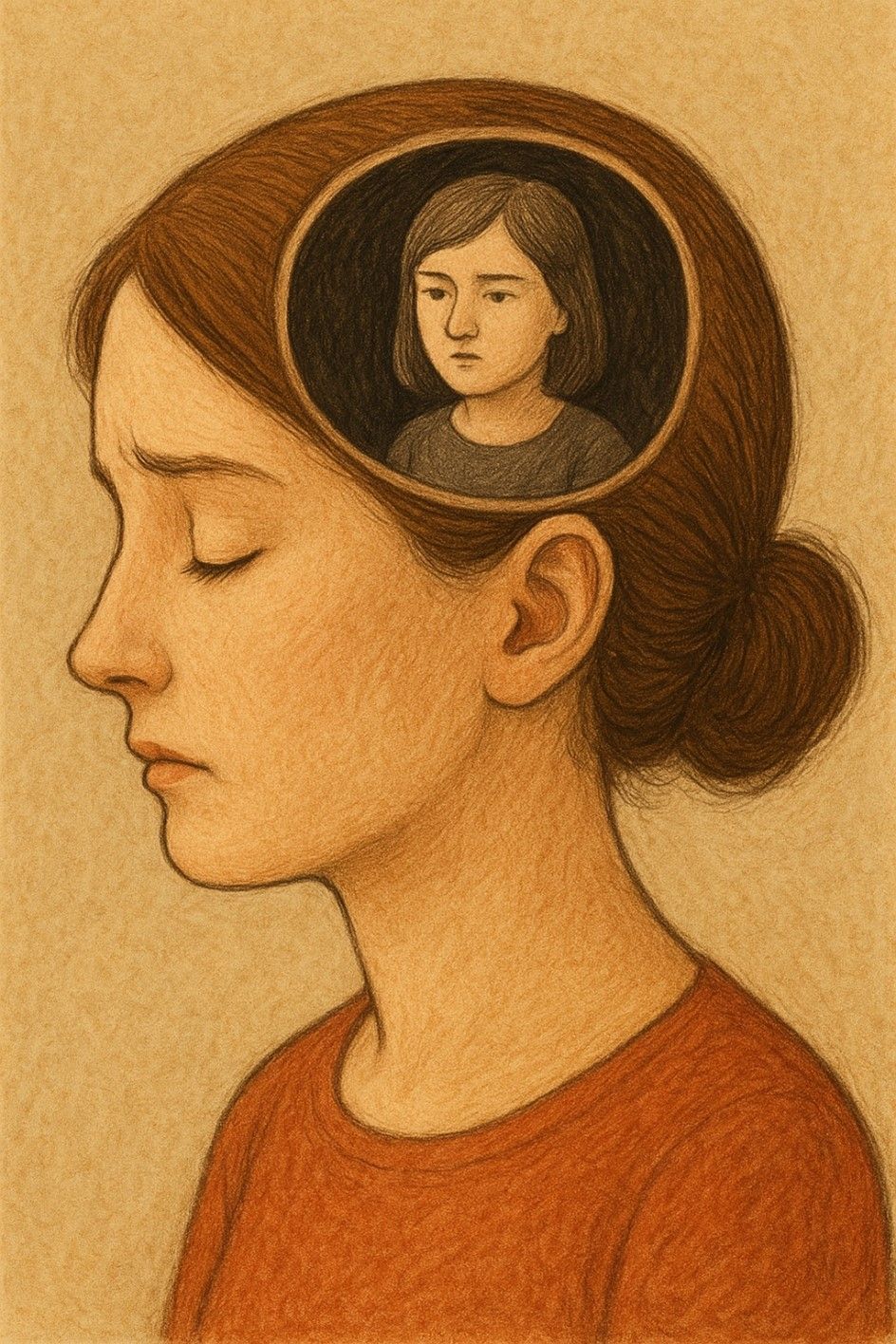
Sometimes her voice is barely a whisper and sometimes it’s a deafening roar, but she is always there in the background, in the foreground, on the sidelines of my life. I try my best and do my utmost to silence her and sometimes it works and I win, but more often than not we are constantly in battle, her and me, a raging internal war of words and wills. Who am I talking about? That critical voice inside of me that is constantly berating me for every single little thing I do. In her book The Sober Diaries (2017), Claire Pooley calls this voice Negative Nellie. Others call this voice the inner critic, but I have assigned this voice the female gender; I have always perceived this voice to be a ‘she’ because of the bitchy tone she uses. She is the meanest girl to the power of a hundred and it makes sense for this voice to be a ‘she’ in my case because ‘she’ is part of me and at times it is impossible to separate ‘her’ voice from my own.

Let me give you an example - yesterday as I attended my Strength and Conditioning Class at the local gym she started whispering in my ear, and she knew what to say and exactly how to say it. The words went something like this: “Why are you even doing this? What’s the point? You will never have toned arms – in fact the only thing that will really sort your arms is surgery, and you can’t afford that so…. Why can’t you lift heavier weights, look at everyone else – they’re way fitter than you, and toned, and look they really have their sh*t together not like you” On and on she went. Now, I couldn’t adopt my usual approach to her in the gym (which is to tell her to f*ck off at the top of my voice) as I think I would have got some strange looks, but in heeding her voice, I was in such bad form by the time I left the gym.
In an article called “Living with your Inner Critic”, Anna K. Schaffner writes that “the founding father of psychoanalysis, Sigmund Freud, explained the formation of our superegos (what we call our inner critic) as a process during which we internalize external views of ourselves – predominantly those of our parents. This can be a cruel and self-flagellating force, which sadistically punishes and tyrannizes the ego” (Freud, 1915/2001). Schaffner also writes that “We may deem ourselves unworthy and despicable, and expect the world to see us that way, too. We may be more prone to abuse substances in order to numb this relentless torturer in our head”. It is interesting to note that those of us who are in recovery from alcohol addiction may be more susceptible to this voice.


Sometimes her voice is barely a whisper and sometimes it’s a deafening roar, but she is always there in the background, in the foreground, on the sidelines of my life.

Personally, I have explored the whole notion of the inner critic in therapy, and it has been suggested to me that this inner critical voice can often be the voice of someone who had a strong influence on you as a child. I know exactly who that is! So, what can we do to quell this voice? And yes, I have heard the advice that you should ask yourself the question as to whether you would speak to your nearest, dearest friend like this. And of course, the answer is no - of course I wouldn’t, but to be honest I believe that this is almost too soft an approach. We need much stronger weapons and words if we are going to combat Demon Dora... apologies to anyone called Dora. But seriously, life is hard enough and in eradicating alcohol from our lives, we have embarked on such a huge undertaking. We really need to be our own best friend; as saccharine as this may sound, it’s the truth. We should be our own biggest cheerleaders because if we can’t support ourselves in the most loving, caring way possible, why in God’s name should we expect anyone else to?

I think there is a Demon Dora in all of us, and often she is so intertwined within our minds and our thinking that it can be very difficult to distinguish her from our true selves. If this voice has been in your head for years and years, you may see it as an inherent part of you and it can be tricky to separate her out and silence her. My advice to you is what I have found to have worked for me (most of the time!). Silence her/him/it as soon as you hear her/him/it. Try and catch the voice early and then tell her to get the f*ck out of your head. You do not need her -even though she will do her utmost to convince you otherwise. Can you imagine a life without her? Where you are actually cheering yourself on from the sidelines of your own life? Can you imagine starting your day with Positive Patricia instead of Negative Nellie? What difference would that make to your life?

Grá & Solas

Claire
Xx

Sources:
Living With Your Inner Critic
Claire Watts is a singer songwriter, musician and academic living in West Clare, Ireland. 
Created with